
Sweepstakes AMOE Rules: Claim Free SC by Mail
 Available in US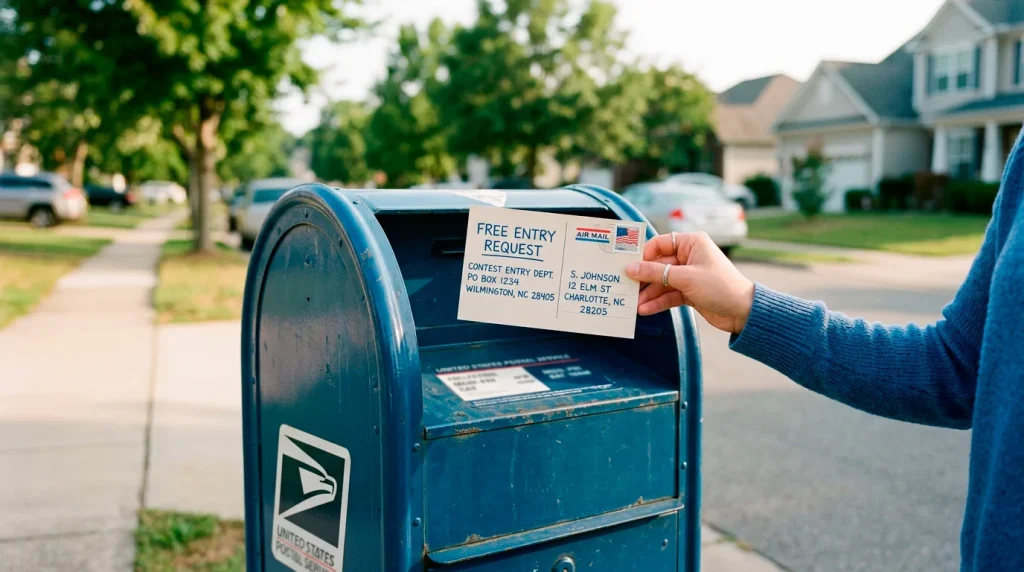
Sweepstakes platforms operate in a strange legal gray zone. They look like casinos, feel like casinos, and occasionally pay out like casinos. Yet they remain accessible in states where actual online gambling is a felony. The mechanic that makes this possible has an uninspiring name: Alternative Method of Entry, or AMOE.
The AMOE sweepstakes entry requirement is the legal linchpin of the entire sweepstakes casino industry. Without it, every platform operating under the dual-currency model would be classified as unlicensed gambling. Understanding how AMOE works reveals why sweepstakes sites must offer free play, how they structure their terms of service, and what this means for players who prefer not to spend a dime.
This guide breaks down the legal logic, the mail-in mechanics, and the practical considerations for anyone thinking about using free entry options instead of purchasing Gold Coins.
Regulatory Framework for Alternative Methods of Entry
American gambling law generally hinges on three elements: consideration, chance, and prize. Remove any one of these, and the activity ceases to be gambling in most legal frameworks. Traditional casinos involve all three: you pay money, outcomes depend on chance, and you can win prizes. Sweepstakes platforms sidestep this by eliminating consideration—at least technically.
Magnus Boberg, founder of JustGamblers, summarized the logic in 2026: “Traditional gambling requires three elements: consideration (payment), chance, and prize. Sweepstakes sites do not require payment, so they bypass regulations that apply to traditional online gambling.” This is the core principle that AMOE enforces in practice.
When a platform offers an alternative method of entry, it removes the mandatory purchase requirement. Players can obtain Sweeps Coins—the redeemable currency—without spending anything. Whether they choose to buy Gold Coins and receive bonus Sweeps Coins alongside them, or acquire Sweeps Coins through mail-in requests, social media giveaways, or daily login bonuses, the platform can argue that consideration is optional.
This distinction matters because it determines where sweepstakes casinos can legally operate. According to KPMG’s 2026 industry primer, sweepstakes casinos are accessible in more than 35 states, while regulated iGaming operates in only seven. The gap exists precisely because sweepstakes platforms have structured their business around AMOE compliance.
Courts and regulators have not universally accepted this argument. Several state attorneys general have issued cease-and-desist orders, arguing that the AMOE mechanism is a technicality that obscures what is functionally gambling. But as of early 2026, no federal court has definitively ruled that properly implemented sweepstakes with genuine AMOE options constitute illegal gambling under federal law.
How Mail-In AMOE Works
The mail-in option is the most traditional form of AMOE. It exists because sweepstakes law developed long before the internet, when companies ran promotional contests through physical mail. Sending a handwritten request and receiving entry tickets in return created a paper trail that demonstrated no purchase was necessary.
Modern sweepstakes platforms have adapted this mechanism. The typical process involves writing your request on a standard 3×5 inch index card or plain piece of paper, including your registered username or email, the number of Sweeps Coins you’re requesting, and sometimes a specific phrase the platform requires. You mail this to an address listed in the platform’s terms and conditions, usually a processing center that handles requests in bulk.
Response times vary. Some platforms state 7-10 business days; others take three to four weeks. The amount of Sweeps Coins awarded per request is usually modest—often equivalent to a single day’s login bonus or less. Platforms cap how many requests you can submit per day or per stamp, both to limit their costs and to maintain the legal fiction that mail-in is a legitimate alternative rather than an afterthought.
The economics here are intentionally unappealing. A first-class stamp costs around 73 cents in 2026, and a mail-in request might yield 2-5 Sweeps Coins depending on the platform. Compare this to purchasing a Gold Coin package where a $20 purchase often includes 20-40 bonus Sweeps Coins plus the Gold Coins themselves. The mail-in route is technically available but practically inconvenient—which is exactly the point.
Platforms walk a fine legal line. If the AMOE is so burdensome that effectively no one uses it, regulators could argue it’s illusory. But if the AMOE is too generous, the business model collapses. The mail-in option exists to satisfy legal requirements while channeling nearly all users toward purchases.
How Platforms Implement AMOE
Beyond mail-in requests, sweepstakes platforms have developed multiple AMOE channels that don’t require physical mail. These include daily login bonuses, social media promotions, referral programs, email newsletter codes, and promotional giveaways tied to platform events or holidays. Each of these provides Sweeps Coins without requiring any purchase.
The daily login bonus is the most common AMOE implementation. Most platforms award some amount of Gold Coins and Sweeps Coins simply for logging in each day. The amounts escalate if you log in consecutively—day five might award three times what day one offers. This approach gives platforms a defensible position: anyone can accumulate Sweeps Coins over time without ever entering payment information.
Social media giveaways serve a dual purpose. They function as AMOE compliance while also driving engagement and follower counts. Platforms post codes on their Facebook, Twitter, or Instagram accounts that can be redeemed for Sweeps Coins. The codes typically expire within hours or days, encouraging users to follow actively.
The conversion rates reveal how the business actually works. According to testimony given to the Maryland legislature in 2026, only 1-5% of social casino users make purchases. The remaining 95%+ play exclusively with free coins obtained through AMOE methods. This statistic cuts both ways: it demonstrates that free play is genuinely available, but it also shows that platforms are designed to convert a small percentage of users into paying customers while the majority plays without cost.
Terms of service language reflects the legal imperative. Platforms prominently state “no purchase necessary” and link to official rules documents that detail every AMOE option. This documentation exists partly for players and partly as evidence in potential regulatory disputes. If a platform ever faces accusations of operating as an unlicensed casino, the detailed AMOE rules are exhibit A in the defense.
Should You Use AMOE? Practical Considerations
If you want to play sweepstakes slots without spending money, AMOE options make it possible. The daily login approach is the most time-efficient: logging in takes seconds and accumulates Sweeps Coins over weeks. Mail-in requests work but require effort disproportionate to the reward. Social media giveaways fall somewhere between—useful if you’re already active on those platforms, not worth creating accounts for.
The limitation is pace. Free play means slow accumulation. Where a $20 purchase might give you enough Sweeps Coins for an hour of play at moderate stakes, the same amount through daily logins could take weeks. Players who value their time over their money will generally purchase. Players who enjoy the slow grind or genuinely can’t afford discretionary spending have a legitimate free path.
There’s also a strategic element for platforms. Players who log in daily without paying are still valuable. They increase engagement metrics, may eventually convert to paying customers, and provide legitimate evidence that the sweepstakes model functions as advertised. Some platforms have experimented with making AMOE options more generous specifically to defend against regulatory challenges.
For players in states where sweepstakes platforms face legal uncertainty, AMOE participation carries the same risks as purchasing. If a platform shuts down due to regulatory action, both paying and non-paying users lose access. The AMOE status protects the platform’s legal structure, not the individual player’s account.
The bottom line is practical: AMOE exists because the law requires it. Platforms comply because they must. Players benefit from options, but those options are deliberately structured to encourage purchases while maintaining legal defensibility. Understanding this dynamic helps you make informed choices about how you engage with sweepstakes platforms.