
Sweepstakes Slot Volatility: High vs Low Variance Options
 Available in US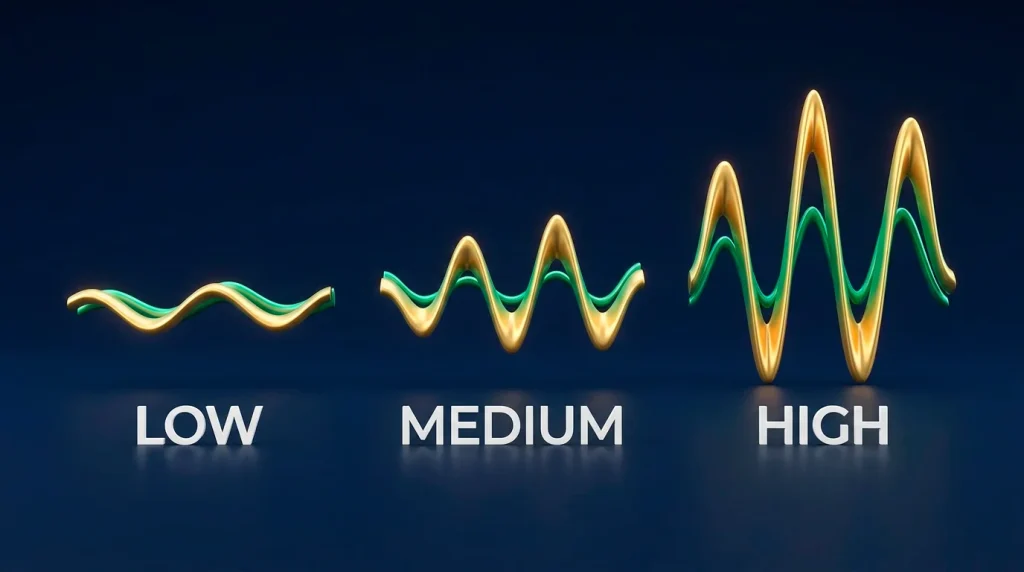
Every slot game has a personality. Some pay out small amounts frequently, keeping your balance relatively stable through extended sessions. Others go long stretches without paying anything significant, then deliver massive wins that transform your balance in a single spin. This personality is volatility, and understanding it changes how you should approach different games.
Sweepstakes slot volatility works identically to volatility in regulated casino slots. The mechanics are the same because the games often come from the same providers. What differs is how you should think about volatility when playing with Sweeps Coins rather than deposited cash.
This guide explains what volatility actually means mathematically, describes the practical differences between low, medium, and high volatility games, helps you choose the right volatility for your playing style, and examines how volatility should influence your bankroll management.
Impact of Variance on Hit Frequency and Payouts
Volatility measures how much individual results deviate from the expected average. A game with 95% RTP will, over millions of spins, return 95 cents for every dollar wagered. But individual sessions don’t look like the average. Volatility describes how wild the swings are around that long-term expectation.
Think of two games with identical 95% RTP. One pays small wins on most spins, with occasional dry spells and occasional larger hits. The other pays nothing for dozens of spins, then delivers wins worth hundreds of times the bet. Both games have the same long-term return, but the experience of playing them differs dramatically. The second game has higher volatility.
Mathematically, volatility relates to variance—the statistical measure of how spread out results are around the mean. High variance means results scatter widely. Low variance means results cluster near the average. Game designers choose volatility deliberately to create different player experiences.
Hit frequency and win size move inversely within a given RTP. Games that hit frequently must pay smaller amounts to maintain their return percentage. Games that hit rarely can offer larger individual payouts. You can have frequent small wins or rare big wins, but not both without changing the underlying RTP.
Providers sometimes publish volatility ratings, though terminology varies. Some use low-medium-high scales. Others use numerical ratings. Some don’t disclose volatility at all, leaving players to infer it from experience. When volatility information is available, it’s worth consulting before committing significant play to unfamiliar games.
Low, Medium, and High Volatility
Low volatility slots produce steady, predictable sessions. You’ll see wins regularly—perhaps on 30-40% of spins—though individual payouts are modest. Your balance fluctuates gently around its starting point. Extended losing streaks are uncommon, but so are windfall wins. These games suit players who prioritize entertainment duration over the possibility of big scores.
Medium volatility slots balance frequency and size. Wins come less often than in low volatility games but more often than in high volatility options. Individual payouts can be meaningful without being rare. Most players find medium volatility games provide satisfying gameplay with reasonable upside potential. The category is broad, encompassing games that lean slightly toward either extreme.
High volatility slots concentrate returns into rare, large events. You might spin 50 or 100 times without a significant win, then hit a bonus round paying hundreds of times your bet. These games produce dramatic sessions—you’ll either lose your balance or multiply it substantially. The experience is intense but not for everyone.
According to the American Gaming Association’s player survey, 90% of sweepstakes users understand they’re participating in something that functions like gambling. This awareness should inform volatility choices. Players who understand they’re gambling can make informed decisions about how much risk to accept.
Jackpot games typically exhibit extreme volatility by design. The massive top prizes must be funded by frequent losses from the player base. If you’re playing specifically for jackpot chances, you’re accepting volatility as the price of that opportunity.
Bonus features often drive volatility differences. Games with infrequent but powerful free spin rounds will be more volatile than games with frequent small bonus triggers. Understanding how bonus mechanics work helps predict volatility even without explicit ratings.
Choosing the Right Volatility for Your Style
Your optimal volatility depends on what you want from playing. Entertainment value, risk tolerance, and session goals should all inform the choice. There’s no universally correct answer—only choices that align better or worse with individual preferences.
If you want extended playtime from a fixed balance, choose lower volatility. Your Sweeps Coins will last longer on games that return small amounts frequently. The trade-off is reduced chance of walking away with dramatically more than you started with. You’re optimizing for duration rather than upside.
If you’re playing specifically for the chance of big wins, higher volatility is appropriate. You accept that most sessions will deplete your balance, but occasional sessions will produce substantial results. According to the AGA survey, 68% of sweepstakes players identify winning money as their primary motivation. For these players, volatility is the mechanism that creates winning opportunities.
Your current balance matters. High volatility games require sufficient bankroll to survive the inevitable losing stretches. Playing high volatility with a small balance means high probability of bust-out before hitting the wins that justify the approach. Match your volatility choice to what you can afford to lose.
Emotional resilience factors in. High volatility games produce frustration during dry spells. If losing streaks affect your mood or decision-making, lower volatility provides a gentler experience. Self-knowledge about how you react to losses should inform game selection.
Consider mixing volatility levels across sessions. Playing low volatility when you want relaxation and high volatility when you’re feeling lucky allows flexibility. You don’t have to commit to a single approach permanently.
Impact on Bankroll Management
Volatility directly determines how much you need to sustain play. Higher volatility requires larger bankrolls relative to bet size. The relationship is mathematical—more variance means more extreme outcomes, including more frequent bust-outs if bankroll is insufficient.
For low volatility games, a bankroll of 50-100 times your bet size provides reasonable session sustainability. You’ll experience ups and downs but should rarely exhaust your balance purely through variance. Most sessions will end within a manageable range of where they started.
High volatility games may need 200-500 times your bet size to provide meaningful chances of hitting the features that justify the approach. Smaller bankrolls will frequently bust before reaching potential big wins. If you can’t afford appropriate bankroll depth, you’re gambling on luck rather than playing through the variance.
Bet sizing should adapt to volatility. Lower bets on high volatility games extend play while maintaining jackpot eligibility. Higher bets on low volatility games accelerate sessions without dramatically increasing bust risk. The interaction between bet size, volatility, and bankroll creates flexibility in how you structure sessions.
Playthrough requirements interact with volatility in specific ways. If you’re clearing a playthrough requirement, lower volatility provides more predictable progress. High volatility might clear the requirement quickly with a big win or might consume your balance before completion. The choice depends on whether you’re optimizing for certainty or upside during playthrough clearing.
Understanding sweepstakes slot volatility transforms random game selection into informed choice. The games you play shape your experience more than any other factor under your control. Choosing volatility deliberately rather than accidentally improves both enjoyment and outcomes.